

Top Tips For Your First Driving Lesson
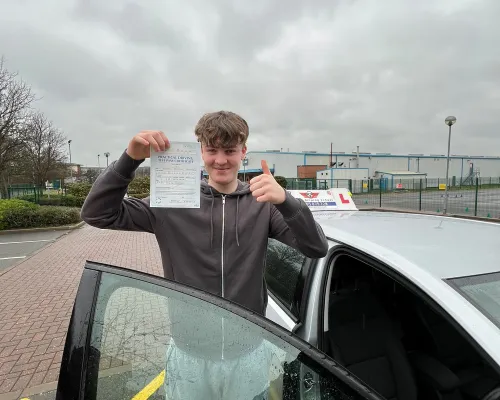
The night before your first driving lesson, you’ll probably lie there replaying every possible disaster. Stalling at the lights. Reversing into a bin. Forgetting which pedal is which.
Take it from us, that’s all completely normal. Pretty much every learner feels the same way.
And here’s the bit that makes it easier: your first lesson isn’t a test. Nobody’s expecting you to glide off like you’ve done it for years. You’re there to get comfy, meet your instructor and work out what all those pedals actually do.
A bit of prep helps, though. So here’s the stuff worth sorting before you go.
Get Your Provisional Licence Sorted
Can’t have a lesson without one, so this is job number one. The basics:
- You can apply from 15 years and 9 months
- You usually can’t start driving a car until you’re 17
- Applying online through GOV.UK is quickest
- It normally turns up within about a week, but extra identity checks can add a bit more
Don’t leave it to the last minute, because that’s when things go wrong. When it arrives, stick it somewhere you won’t lose it and bring it with you on the day.
Can You Read A Number Plate?
Odd one, this, but it catches loads of people out. You must be able to read a number plate in good daylight from 20 metres for a new-style plate, or 20.5 metres for an old-style plate. If you need glasses or contact lenses to meet this standard, you must wear them whenever you drive.
Not sure what 20 metres looks like? Try this:
- Find a safe, clear space where you can estimate a distance of around 20 metres
- Stand by the first one and read the plate on the last
- If it’s a blur, book in with an optician before your lesson rather than after
And if you do need glasses, wear them every time you drive. Not just when you remember.
The Night-Before Checklist
Nothing clever here. It’s just the stuff that slips your mind when you’re nervous.
Sort this | Why it matters |
Provisional licence | No licence, no lesson |
Glasses or contact lenses | You need them to meet the 20-metre eyesight standard |
Flat, flexible shoes | Heels, flip-flops and chunky boots make it hard to feel the pedals |
Layers and sunglasses | Cars go from freezing to stuffy surprisingly fast |
Water and a light snack | Keeps your energy up without sending you to sleep |
A few questions | Your instructor would much rather you ask than guess |
Try to get there a few minutes early. Arriving in a flap is a great way to make the nerves worse.
Tell Your Instructor You’re Nervous
Just say it. Within the first five minutes, out loud, no shame.
Your instructor has sat next to all sorts. The chatty ones, the silent ones, the ones who grip the wheel like it’s about to make a run for it. They’ll slow right down if that’s what you need.
A lot of learners who’ve reviewed Burton Driving School mention how patient and calm their instructor was. You’ll get far more out of that if you’re upfront about how you’re feeling.
Handy things to say:
- “I’m properly nervous, to be honest”
- “Sorry, can you explain that again?”
- “Can we have another go at that?”
Nobody’s marking you. Ask away.
So What Actually Happens?
Most first lessons start slow. Probably slower than you’re expecting. Your instructor will usually find somewhere quiet before you go anywhere, and the early bit tends to cover:
- Getting your seat, mirrors and seatbelt right
- Finding the pedals, gears, indicators and the rest of the controls
- Moving off and stopping
- Getting a feel for the steering
In a manual, the clutch is usually the awkward bit. You’ll probably stall. Nearly every driver on the road has done it, so don’t take it personally.
If you’d rather get steering and road awareness sorted first, an automatic skips the clutch altogether. We teach both, so go with whichever feels right to you.
How Long Should Your First Lesson Be?
Honestly, there’s no wrong answer. Burton Driving School does three lengths:
- One hour: short and focused, so you won’t be wiped out
- One and a half hours: a bit more breathing space
- Two hours: loads of time to properly get going
Think about how you usually cope with new things, then go with your gut. Not sure? Start shorter and see how you feel.
You’ll Get Stuff Wrong (That’s The Whole Point)
At some point you’ll probably:
- Stall
- Forget a mirror check
- Put the wipers on when you meant to indicate
Happens to everyone. It’s what being a learner is.
And try not to compare yourself with that mate who “picked it up in two weeks”. There’s always one. Ignore them.
Keep Practising Between Lessons
One lesson won’t turn you into a driver. It’s not meant to.
The amount of practice you need depends on how quickly you develop your skills and confidence. Regular lessons, combined with private practice when you’re ready, can help you build experience. There’s no fixed number of hours that suits everyone.
How old do I have to be to start driving lessons?
You can apply for a provisional licence from 15 years and 9 months, but you usually can’t start driving a car until you’re 17.If you have a disability or long-term health condition, the rules can be different, so check GOV.UK.
What should I bring to my first lesson?
- Your provisional driving licence (the big one)
- Glasses or contact lenses, if you wear them
- A bottle of water and an extra layer
How many lessons will I need?
Ah, the big question. It really depends on you. The DVSA’s average is around 45 hours of lessons plus about 22 hours of private practice, but there’s no set minimum.Some people get there quicker, while others take longer.Your instructor will give you an honest steer as you go.
What if I can’t read the number plate from 20 metres?
Don’t panic. It often just means you need glasses or contact lenses, so book an eye test with an optician.You do have to meet the standard to drive legally, so it’s best to get it sorted before you start lessons.
Manual or automatic, which should I go for?
Neither’s wrong. Manual means getting to grips with a clutch, which takes a bit more practice. Automatic lets you focus on steering and road awareness first.We offer both, so choose what feels right. Still torn? Have a chat with us.