

How to Build Confidence Before Your Driving Test
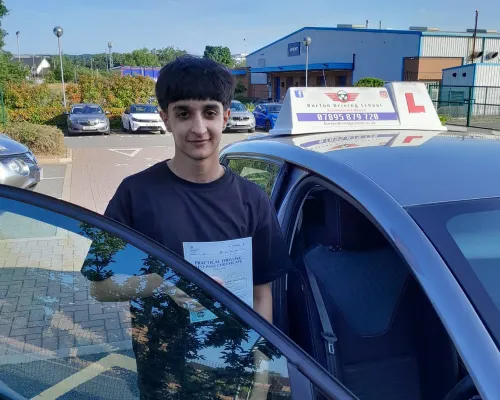
Let’s be honest. Nobody feels completely ready for their driving test. Even the learners who look cool as anything are usually running on nerves and too much tea.
You’ve put in the lessons. You can do your local roundabout practically with your eyes shut. And yet the second you picture an examiner sitting next to you, your stomach does a backflip.
Totally normal. And here’s the good news: confidence isn’t something you’re born with. You can build it, bit by bit, and most of that happens well before test day.
So here’s how.
Know What You’re Walking Into
Nerves love a mystery, so let’s get rid of it. The practical test lasts about 40 minutes, and it runs like this:
- An eyesight check, where you read a number plate from 20 metres
- A “tell me” safety question before you set off, then a “show me” one while you’re driving
- Around 20–35 minutes of independent driving, following a sat nav, traffic signs or a combination of both
Honestly, just knowing the order takes the edge off.
Remember What a Pass Actually Looks Like
This is the big one. You don’t need a perfect drive.
- You can make up to 15 driving faults and still pass
- One serious or dangerous fault, or more than 15 driving faults, means a fail
So one wobbly hill start or a late mirror check isn’t the end of the world. Don’t let a small slip snowball.
Stay in the moment and keep your eyes up. Dwelling on what just happened won’t help you at the next junction.
Work On What Makes You Wobble
Everyone has a thing. For some it’s roundabouts. For others it’s parking or busy junctions.
Be honest with yourself:
- Write down the three things that make your stomach flip
- Tell your instructor and ask to go over them again
- Practise until they feel almost boring
Learners who review Burton Driving School often mention how patient and calm their instructor was, which is exactly who you want in your corner for this.
The DVSA says learners need around 45 hours of lessons plus roughly 20 hours of private practice on average. That’s only an average, and there’s no shame in a few extra lessons if you want them.
Get Friendly With the Safety Questions
Lots of learners leave these until the last minute, which is a shame, because they’re an easy win.
Before you set off, you’ll get a “tell me” question, like how you’d check the brake lights are working. While you’re driving, you’ll get a “show me” one, such as washing the windscreen or sounding the horn.
Learn the answers and say them out loud to a family member. If you answer a safety question incorrectly, you’ll receive a driving fault. Getting a question wrong doesn’t automatically mean you’ll fail.
Plan the Day
Half of feeling calm is knowing nothing will catch you out. Here’s a quick plan.
Before you go | Why it helps |
Ask your instructor to sit in the back | They can’t help during the test, but they can hear the feedback afterwards |
Check the GOV.UK list of what to take | Nothing worse than a panic at the test centre door |
Go easy on the caffeine | Too much can leave you jittery |
Aim to arrive 5 to 10 minutes early | Not rushed, but not hanging about for ages either |
Check the facilities at your test centre | Knowing what’s available beforehand can help you plan your visit |
Try the number plate check | You’ll read one at 20 metres before you even get in the car |
Small stuff, sure. But small stuff is exactly what throws you when you’re nervous.
Remind Yourself of This on the Day
- The examiner knows you’re nervous and will do their best to put you at ease
- If you’re unsure, ask them to repeat an instruction or direction
- It’s not a geography test, so going the wrong way during independent driving won’t necessarily cost you a fault
- You don’t need to be perfect, just safe
Only Book When You’re Ready
- You’ll need to pass your theory test before you can book the practical
- Book your test when your instructor believes you can drive safely and independently, and you feel ready to take it
- You can move your test for free, as long as you give at least 10 full working days’ notice
Don’t let a date in the diary rush you. Your instructor will give you an honest steer on whether you’re ready.
If It Doesn’t Go to Plan
Plenty of people don’t pass first time. It stings, but it isn’t the end of the road.
- You’ll get a report showing the faults you made
- Your instructor can listen to the examiner’s feedback with you if you want them to
- You must wait at least 10 working days before taking another practical test, and availability may mean waiting longer
Use that time to work on what tripped you up, then go again.
Frequently Asked Questions
How long does the driving test last?
About 40 minutes, including the eyesight check, safety questions and around 20–35 minutes of independent driving.
How many mistakes can I make and still pass?
Up to 15 driving faults. A serious or dangerous fault means a fail, and so does going over 15 driving faults.
Can I take my instructor with me?
Yes, and the DVSA encourages it. They sit in the back and can’t help you during the test, but they can hear the feedback afterwards. You can also take someone over 16 instead.
What if I don’t hear or understand an instruction?
Just ask. The examiner can repeat instructions or directions if you’re unsure, and asking won’t count against you.
What happens if I fail?
You’ll receive a report showing the faults you made and must wait at least 10 working days before taking another test. Talk through the feedback with your instructor, work on the areas that need improvement and book again when you’re ready.