

How To Prepare For Your Practical Driving Test
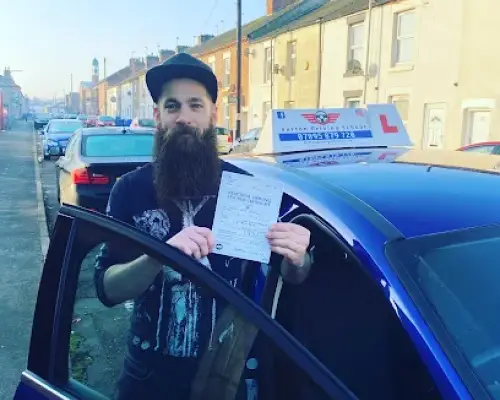
You’ve got the date. Maybe it’s six weeks away, maybe it’s next Thursday, and either way your stomach has started doing its own little warm-up routine. That’s completely normal. Plenty of people who pass with barely a fault spend the night before staring at the ceiling. Feeling nervous doesn’t mean you’re unready. Mostly it means you’d quite like to pass.
So let’s go through what actually happens, what’s worth spending your last few lessons on and what tends to help on the morning itself.
What You’ll Be Asked to Do
First up is the eyesight check, where you read a number plate from a set distance. Then comes a “tell me” question, which you answer before you drive off. The whole test usually takes around 40 minutes, with about 35 of those spent driving. At some point you’ll do one reversing manoeuvre, perhaps a parallel park or a bay park, and the examiner will ask a “show me” question while you’re on the move.
A good chunk of the drive is independent driving, somewhere between 20 and 35 minutes. Instead of being told every turn, you follow road signs or the examiner’s sat nav. Take a wrong turn, and you won’t fail on the spot. What counts is how safely you drive while you work out where you are.
Work On the Thing You’re Avoiding
Everyone has one. For some people it’s roundabouts. For others it’s finding a gap at a busy junction, or reversing round a corner without clipping the kerb. Ask your instructor which one is yours, then spend your remaining lessons on it, even though it’s far more fun to keep doing the bits you’re already good at. Those won’t be what decides your result.
Get Friendly With the Local Roads
Test routes aren’t published, but they do use the kinds of roads you’ll find near your test centre. If you’re having driving lessons in Burton-on-Trent, ask your instructor to take you round the busy junctions, the roundabouts and the stretches where the speed limit keeps changing, and to do it more than once. The first time you meet a tricky roundabout shouldn’t be with an examiner sitting beside you.
A Few Habits Worth Building
Examiners see the same things again and again, so these are worth getting right:
Mirrors: Check them early and often, before you signal, turn or change speed, not in a panicked glance at the last second.
Junctions: Take a slow, proper look. It might feel awkwardly long, but it looks careful, and careful is the idea.
Speed: Stay within the limit, but don’t dawdle. Crawling along can hold up other drivers and count against you.
Signals: Give them in good time and cancel them afterwards.
Moving off: Look all the way round, blind spots included, every time.
Do a Mock Test
If you only add one thing to your preparation, make it this. Ask your instructor to run a full mock driving test, with no hints and no running commentary. It’s a bit humbling, which is exactly why it works. You’ll see which habits fall apart when nobody’s helping, and you’ll get to practise independent driving and your manoeuvres in conditions that feel a lot like the real thing.
Learn the “Show Me, Tell Me” Answers Early
These vehicle safety questions catch out more people than you’d think, mostly because they get squeezed in the night before. Ten minutes here and there is plenty. Your instructor can quiz you in the car, or you can practise at home by pointing at a control and explaining what it does.
Get Some Practice Between Lessons
If a parent or friend can take you out, say yes. Just check the car is insured for a learner and that whoever supervises you meets the legal requirements. If that isn’t possible, don’t worry. A well-planned run of lessons can do the same job, and some learners find that bringing them closer together before the test keeps things fresh.
The Week Before
This is about staying steady, not cramming.
Book a final lesson or two, ideally at the same time of day as your test
Find your provisional photocard driving licence and put it somewhere you can’t lose it. If you forget it, your test may not go ahead and you could lose your fee
Look at the GOV.UK driving test pages for the full list of what to bring
Plan your journey so you arrive in good time, without sitting in the car park for an hour winding yourself up
Sleep, eat properly and drink water
On the Day
Have something light to eat, because running on empty makes it harder to think straight. If your instructor offers a short warm-up lesson, take it, as it often settles the nerves. If you don’t catch something the examiner says, just ask them to repeat it. They’d much rather you asked. And try to drive for yourself, not for the examiner. Treat it like any other lesson that happens to have a clipboard in the passenger seat.
When the Nerves Kick In
A bit of adrenaline sharpens you up. A lot of it can leave your mind blank. Before you turn the key, breathe in slowly through your nose and out through your mouth. Remind yourself that you’ve driven these roads before. If you make a mistake, let it go and keep your eyes on the road ahead, because one minor fault won’t fail you. And if it doesn’t go your way, it isn’t the end of the world. Plenty of people pass on their second or third attempt.
1. How long does a practical driving test last?
The whole test usually takes around 40 minutes, including the eyesight check and vehicle safety questions. About 35 minutes of that is actual driving.
2. What should I bring to my test?
Your provisional photocard driving licence. Check the GOV.UK driving test pages before the day for the full list, in case anything else is needed.
3. How many mistakes can I make and still pass?
You can pass with up to 15 driving faults. A single serious or dangerous fault means a fail.
4. How many lessons will I need before my test?
That depends on your experience and how confident you feel. Your instructor can tell you when you’re driving to test standard consistently.
5. What if I don’t pass?
Ask the examiner for feedback, work on those areas with your instructor and rebook when you feel ready. Many drivers pass on a later attempt.